Menu

MICHAEL BURTCH: ARTIST

SCULPTOR, SOUND ARTIST, WRITER, SET DESIGNER

PUBLISHED ARTICLES

AN: INTRODUCTION

Michael Burtch is a percussionist and an art historian. He has published numerous catalogues and articles on various artists including J. Barry, David Bierk, Ken Danby and others.

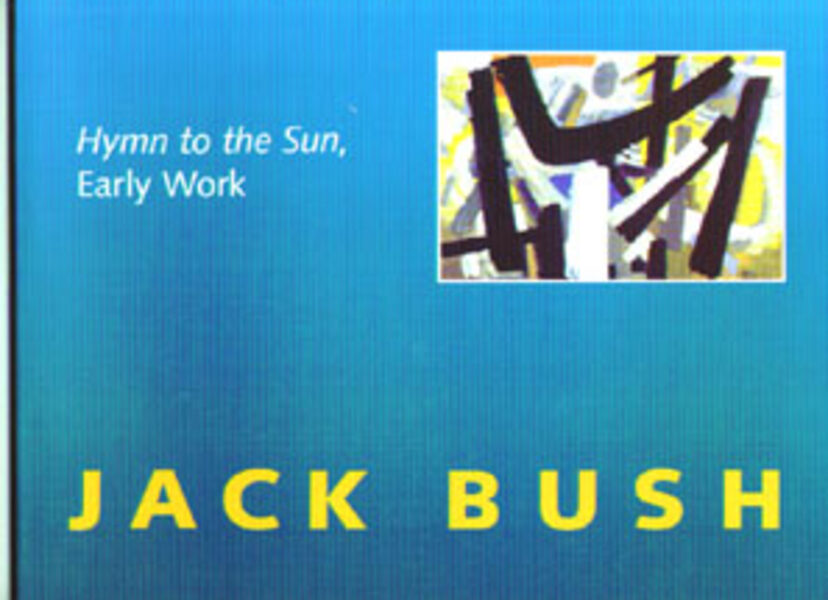
His latest work - Jack Bush, Hymn to the Sun; Early Work, was based on Bush's Journals and was a companion piece to the touring exhibition that crossed Canada.

He has curated exhibitions which had National exposure - "Sans Demarcation" in 1987, David Blackwood, Jean Burke, Robert Carmichael, and Valerie Palmer to name a few.


THE ARTICLES

JACK BUSH

HYMN TO THE SUN, EARLY WORK!

Michael used many avenues to research this tribute to Jack Bush. Terry, Robb and Jack Bush Jr. willingly provided important information and assistance to him. They also gave him their permission to access their father's diaries. These dairies were put in the Library and Archives of the Art Gallery of Ontario by the Bush family in 1987.

Michael describes Jack's growing up years and his struggles to be the artist he wanted to be. The book includes a number of images of Jack's work. The Images show the changes in his approach to art through the years. In describing Bush's work Michael states

There is an honest directness in Bush's attempts to simply paint out his feelings without regard to whether the work was saleable or even worthy of exhibition." This honest self-examination provided Bush not only with a deep well of symbols and motifs that would form the basis of his formal imagery, but it loosened the fetters of convention and the bindings of his ego to allow him greater insImash of rushing home from Jack Bush's coveright into his unconscious and spiritual self. Some of the paintings, such as The Meeting (1947) and Rushinghome 1984), deal with the tensions and pressures of day-to-day existence and have an almost comical air.


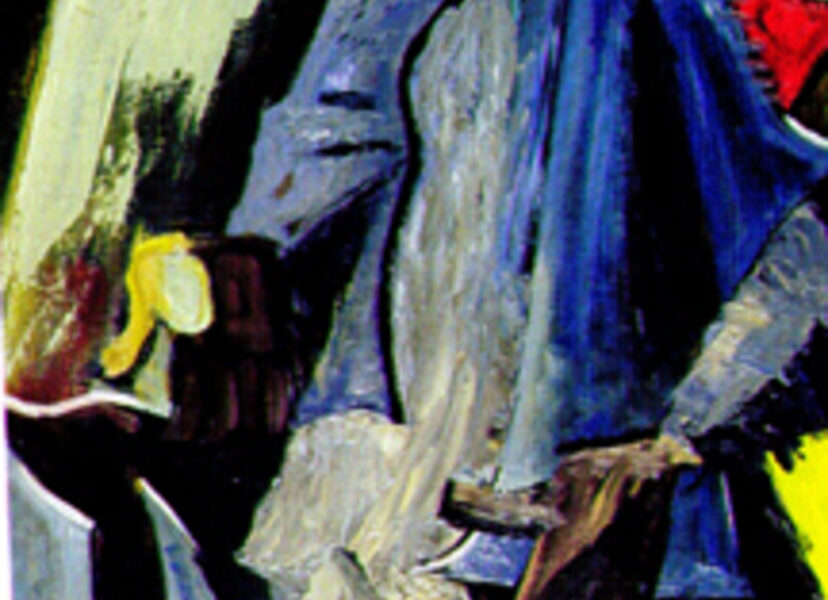
Image of Broken Window by Jack Bush


Other works like Broken Window (1950) are terrifying in their blunt portrayal of a fragmented self. In The Broken Window the "cubism" of open and closed doors and facets of broken and shattered glass point to a means by which Bush could externalize inner passions. Paintings of this sort are grounded in inner necessity, not a desire to investigate twentieth century artistic modes.

The second approach Bush used involved his depiction of religious themes. Bush's religious paintings are, perhaps, his most enigmatic. That Bush was very religious is well known. His parents were devout Anglicans, and stalwarts in St. Columbia's Church in Montreal. In particular, Bush's mother was a faithful Anglican as were her parents. Jack himself sought out St. Thomas Church on Huron St. in Toronto soon after he had arrived, and both he and Mabel were very much involved in the life of the church. Bush was a sidesman during the 1940's and took his family to church regularly. Both he and Mabel openly discussed sermons at the table and they even considered having Bible readings before dinner during Lent (an idea that was not particularly well-received by the sons). However, what Bush had kept discrete from most people was his "inclination" to the priesthood. In May, 1952, in conversation with Dr. Walters, he concludes: "It will be a great joy should I be able to find that I was not intended for the ministry."

This "inclination" lay buried until his late thirties, when it re-emerged, perhaps as a response to the anxieties and tensions that were plaguing him. Further, that the inclination would take on a significant part of his development might have been foreshadowed by the images of churches that were prevalent in his work from 1944 to 1947. The religious theme emerges in 1947 in a very personal manner. However, Bush's work does not appear to be profoundly influenced by earlier painters who depicted religious themes. These religiously inspired works emerge from the same unconscious recess as his "mood" paintings and exhibit the same internal conflicts.

Bush's theology was like his art, direct and honest. He was wary of esoteric and cult beliefs, although he was familiar with and sympathetic to Lawren Harris' theosophic writings and Jock MacDonald's mysticism. In 1953 he ventured to read a book on the life of Buddha, but his won beliefs sprang from within. Bush was later drawn to two literary figures that helped shed a great deal of light on his own spiritual evolution - James Joyce and Christopher Fry. Bush may have been introduced to Fry's dramatic works including The Lady's Not For Burning as early as 1949. Also, it is likely that on his visit to New York in 1950, Bush attended the production of Fry's Venus Observed, a play that he also read in 1952 to his great satisfaction. There are affinities in the images used by Fry and Bush, including fire, red sun, as well as doors and windows. More importantly, both artists shared a belief that human souls were at risk, principally because of the authority of organized religions. Both Fry and Bush believed in humanity's need for spiritual nourishment. Bush came eventually to see that the spiritual could be attained without the mediation of the church, Fry, a missionary's son, came to the realization sooner and incorporated it into his religious drama.

NOTE: If you wished to purchase this book it is still available here.


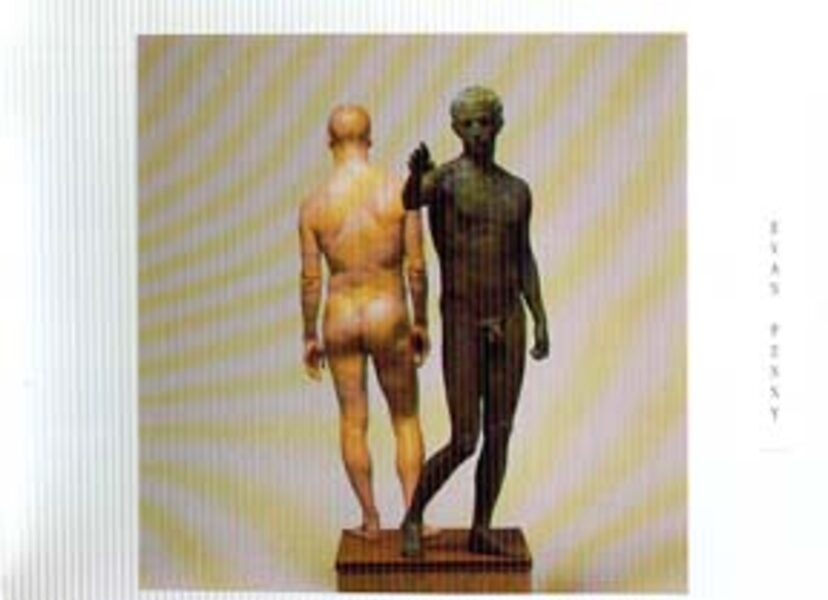
EVAN PENNY


Author: Michael Burtch 1987

An excerpt from publication accompanying the exhibition. (front cover pictured on the left)

"Throughout history the human figure has been the most significant and the most problematical symbol in our visual lexicon. It evokes fear, awe, pathos, mortality and immortality, sexuality, beauty, and all the complex nuances of meaning that lie between. Underlying our fascination for the human figure is the fundamental reason for its power: it reflexes, presents, or re-presents our "double", our posed image; it holds up to our gaze the shifting, fragmented mirror of our "selves" and the public self-the persona, the "other" that permeates and constructs our "image" before the ungraspable flux of our primal being. In spite of or perhaps because of the odds against locating the human figure's precise significance in our mediated understanding of existence, the figure is still the basis of obsessive representation."


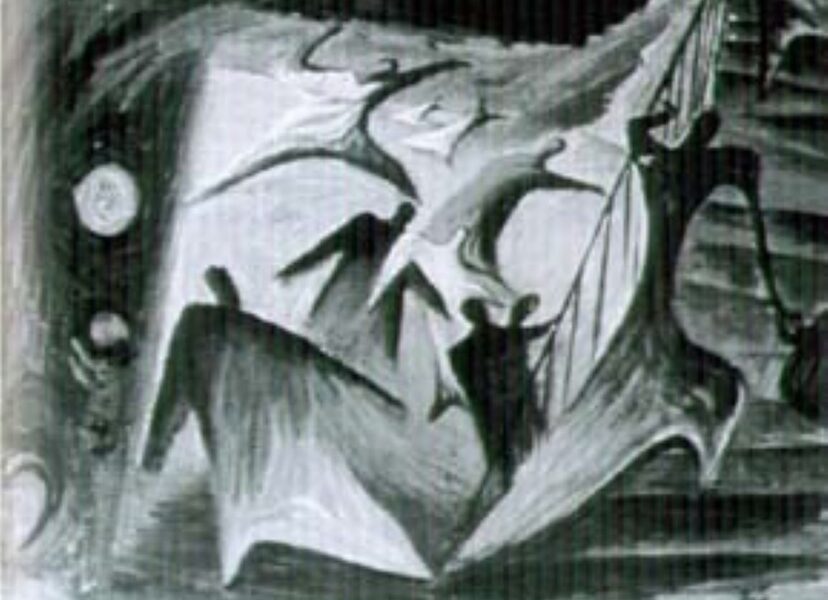
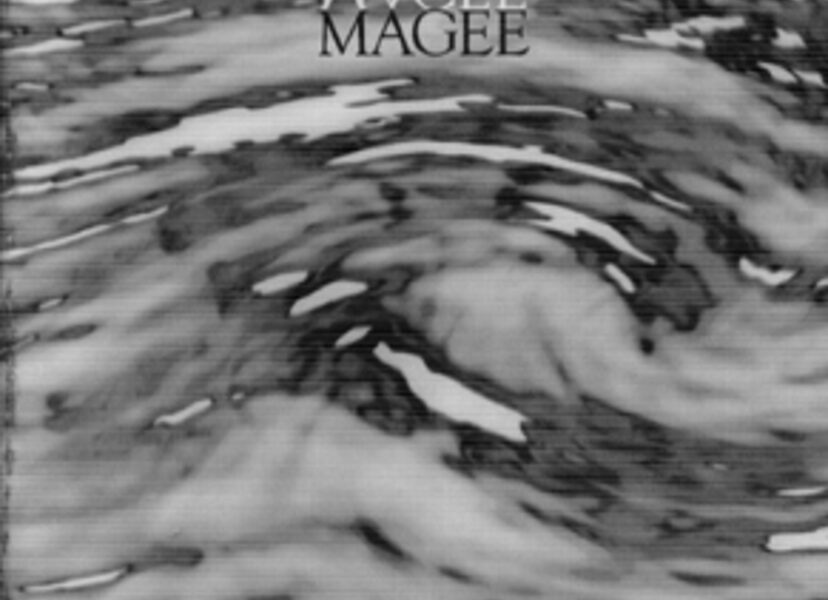
DAVID MAGEE


DAVID MAGEE: DRAWING WATER

An Essay by Michael Burtch

An excerpt from the publication accompanying the David Magee exhibition that contains the essay.


Light. Light in Magee's installation is implicit. It is the counterpoint of dark, the illuminator of the fragments that project from the dark matrix, the medium of revelation through which the peaks of the icebergs of perception rise from the depths of the subconscious. The glass balls of divination, the translucent glaze of the shells are caressed by flickers of light. The fronds of palm, traditionally a symbol for victory over death, and for chastity, act as a curtain to shelter the face of Generva. The eyes, the organ of light, gaze from the lush, aqueous ground. Light shimmers softly from the font, through the water and the idealized boys/girls of Raphael. The light touches St. John's phallic finger, his enlarged breast, emphasizing the unified male/female attributes-the whole person, that underscores Leonardo's imagery. Light falls softly on the idealized, unattainable mother figure the Caterina of Leonardo's phantasy, the mother, the other


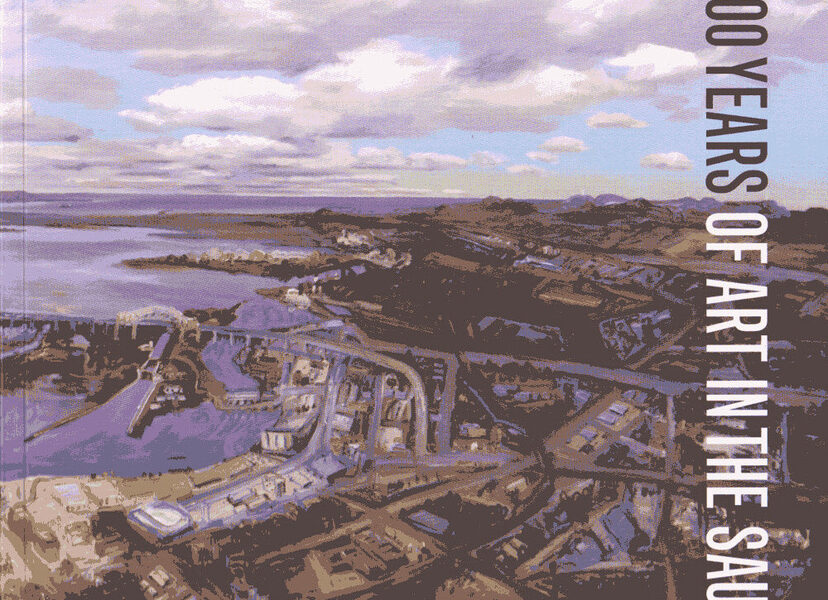
ONE HUNDRED YEARS OF ART IN SAULT

2 9 7 1 6 8